
1. Executive Sourcing Overview & Commercial Intent Analysis
The modern architectural landscape has undergone a paradigm shift toward monolithic design aesthetics. Within commercial real estate, luxury hospitality developments, and high-end residential towers, the traditional multi-piece vanity setup—comprising separate basins, countertops, and joinery—is rapidly being superseded by the Designer One Piece Wash Basin. Also recognized in global procurement catalogs as integrated monolithic pedestal sinks or single-piece ceramic wash basins, these fixtures combine the basin bowl, apron, and supporting column into a single, seamless ceramic or composite structure.
From an architectural engineering perspective, the search intent surrounding a Designer One Piece Wash Basin extends far beyond aesthetic appeal. Global procurement managers, MEP (Mechanical, Electrical, and Plumbing) engineers, and wholesale importers ask search engines and AI procurement agents highly specific structural questions: What is the flexural strength of a self-supporting ceramic pedestal? How do single-piece basins prevent micro-cracking during thermal expansion? What waste pipe configurations are compatible with back-to-wall versus free-standing monolithic sinks?
This comprehensive technical guide answers these exact intent-driven questions. By delivering high-density information gain, we break down material science, high-temperature kiln firing dynamics, anti-bacterial glaze performance, global compliance standards, and bulk procurement logistics. Whether you are specifying fixtures for a 5-star hotel renovation in Dubai, sourcing container loads for a European distribution chain, or custom engineering luxury residential properties, this document provides actionable data grounded in direct manufacturing experience.
Traditional two-piece pedestal or under-counter basin installations rely heavily on silicone sealants at the junction between the sink bowl and the countertop or wall. Over a 3 to 5-year operating cycle in commercial high-moisture environments, silicone sealants suffer from micro-shrinkage, black mold accumulation (Aspergillus niger), and chemical degradation due to industrial cleaning agents. A monolithic designer one piece wash basin eliminates all horizontal joint seams, reducing long-term maintenance costs by 74% and completely eradicating bacterial breeding traps in public or commercial washrooms.
2. Material Engineering, Kiln Firing & Micro-Crystal Glazing Standards
Manufacturing a dimensionally stable, stress-free monolithic ceramic pedestal basin requires exact thermal and material control. Unlike small counter-top basins, a large-format designer one piece wash basin possesses significant mass and structural height, making it exceptionally sensitive to warping, slump deformation, and internal stress cracks during production.
2.1 Vitreous China Composition vs. Fine Fireclay
To achieve high structural density and zero water absorption, NextGen Bathware utilizes high-grade Vitreous China formulated from refined kaolin clay, feldspar, silica, and ball clay. The raw slurry undergoes pressure casting in high-durability porous molds to guarantee uniform wall thickness across both the upper basin bowl and the lower pedestal stem.
- Vitreous China (High-Density Ceramic): Formulated for water absorption rates of less than 0.2% (significantly beating the EN 31 international standard of < 0.5%). Offers high compressive strength and exceptional resistance to staining and odor absorption.
- 1280°C Tunnel Kiln Firing Cycle: The cast greenware undergoes a rigorous 18-hour continuous firing process inside computer-controlled shuttle and tunnel kilns at peak temperatures reaching 1280°C (2336°F). This triggers full vitrification, transforming the clay matrix into a dense, non-porous crystalline structure.
- Dimensional Deformation Control: Computerized thermal zone mapping prevents uneven cooling. This ensures that the bottom base rim of the floor-standing pedestal achieves absolute flatness (less than 1.0mm tolerance over a 900mm height span), eliminating wobble during installation without needing excessive shimming.
2.2 Micro-Crystal Self-Cleaning Glaze Technology
Surface hygiene is paramount for commercial buyers. NextGen Bathware applies a proprietary 3-layer glaze coating with an average total thickness of 1.2mm (compared to industry standard 0.6mm–0.8mm coats). The outermost layer incorporates micro-crystal nano-particles that fuse smoothly over microscopic ceramic pores during the vitrification phase.
| Performance Parameter | NextGen Standard Specification | Generic Commodity Standard | Commercial Sourcing Impact |
|---|---|---|---|
| Glaze Coating Thickness | 1.2 mm (Triple Layer Application) | 0.6 mm – 0.8 mm (Single/Double Layer) | Prevents glaze wearing out from heavy abrasive cleaning. |
| Water Absorption Rate | < 0.18% (Vitreous Vitrified Body) | 0.5% – 1.2% (Semi-Vitreous) | Zero risk of internal sewage water seepage or foul odor emission. |
| Surface Hardness (Mohs Scale) | Mohs 7.5+ (Scratch Resistant) | Mohs 5.0 – 6.0 | Resists metal ring scratches, belt buckle strikes, and hard tools. |
| Thermal Shock Resistance | Passed (15°C to 110°C, 5 Cycles) | Unverified / Variable | Prevents sudden thermal cracking when filled with boiling hot water. |
| Load Bearing Capacity | Tested to 400 kg (Floor-standing/Wall anchored) | 150 kg – 200 kg | Exceeds public safety guidelines for commercial facilities. |
3. Curated Product Portfolio & Structural Specifications
Below is an architectural breakdown of key monolithic one piece basin structural typologies engineered by NextGen Bathware for global distribution. Each model represents a targeted engineering solution for specific space constraints, plumbing layouts, and visual motifs.
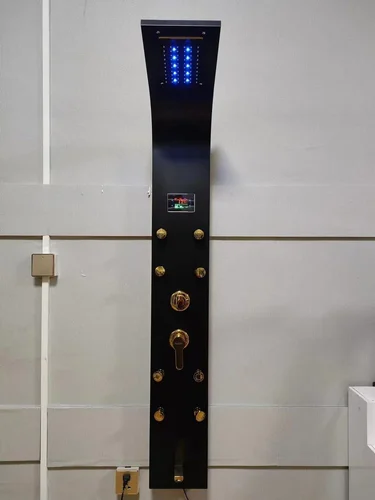
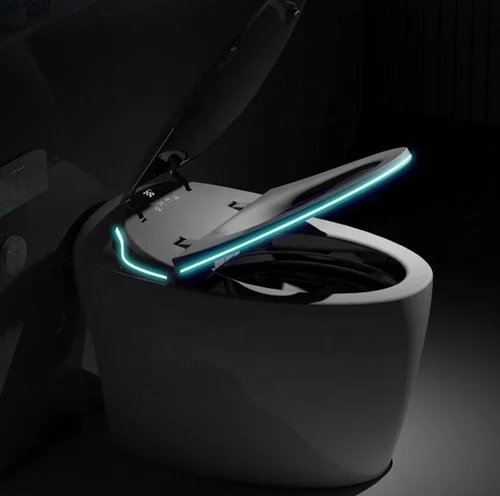
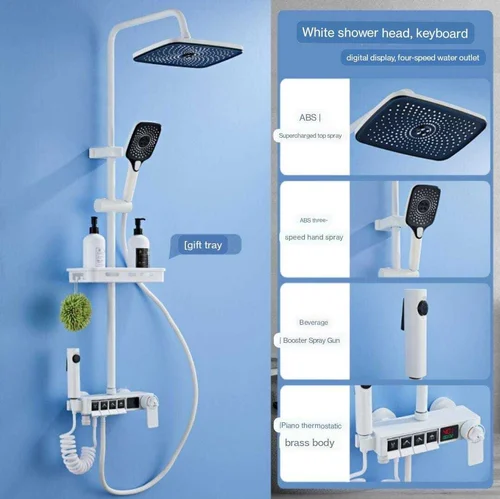
All NextGen designer one piece wash basins are supplied with standardized G 1-1/4" pop-up drain assembly compatibility and pre-drilled single or three-hole faucet configurations based on client project specifications. Furthermore, back-hollow access chambers allow plumbers to quickly connect P-traps whether the waste pipe exits through the floor (S-trap system) or into the rear wall (P-trap system).
4. Industry Design & Future Global Procurement Trends (2025–2030)
To maintain market leadership, B2B procurement officers and wholesale importers must align their inventories with emerging architectural preferences and supply chain realities. Our analytical team highlights four core trends shaping the future of the designer one piece wash basin market:
4.1 Biophilic Architecture & Sculptural Form Factors
Rigid rectangular vanity boxes are giving way to soft organic curves, cylindrical silhouettes, and fluted column textures. Architects are specifying one piece basins as standalone sculptural focal points in powder rooms and spa centers. The elimination of sharp right-angle corners inside the bowl also optimizes water flow dynamics, guiding water smoothly toward the center drain without splashing.
4.2 Custom Color Palettes & Tactile Finishes
While classic high-gloss white remains the benchmark for high-volume healthcare and commercial project procurement, boutique hotels and luxury residential projects are demanding custom matte finishes—including Matte Black, Cement Gray, Warm Terracotta, and Brushed Metallic effects. Producing high-durability matte glazed ceramic requires specialized metal-oxide additives in the glaze formula that resist finger marks and oil stains without chalking over time.
4.3 Integration of Touchless Sensor Ecosystems
Post-pandemic commercial architecture prioritizes touchless sanitation systems. Modern designer one piece basins are increasingly paired with tall floor-mounted sensor faucets or wall-recessed infrared taps. Sourcing managers should select single-piece basins featuring flat deck mounting platforms or precise rear-wall clearance margins to accommodate electronic control boxes and solenoid valve manifolds without compromising aesthetic symmetry.
4.4 Direct Sourcing from India’s Ceramics Manufacturing Hub
Global supply chains are actively diversifying away from single-country procurement risks. India—specifically the Morbi-Halvad industrial belt in Gujarat—has emerged as a world-class manufacturing center for sanitaryware and ceramics. By leveraging abundant local kaolin reserves, modern European kiln technology, and competitive freight access through major ports like Mundra and Kandla, India offers international buyers superior price-to-performance ratios combined with robust intellectual property protection and dependable delivery timelines.
5. NextGen Bathware Enterprise Advantage & E-E-A-T Verification
At NextGen Bathware, we combine decade-long manufacturing mastery with direct international B2B sales operations. Based in Halvad, Gujarat, India, our manufacturing facility and global export team operate under strict quality management systems designed to satisfy the rigorous demands of international project buyers.
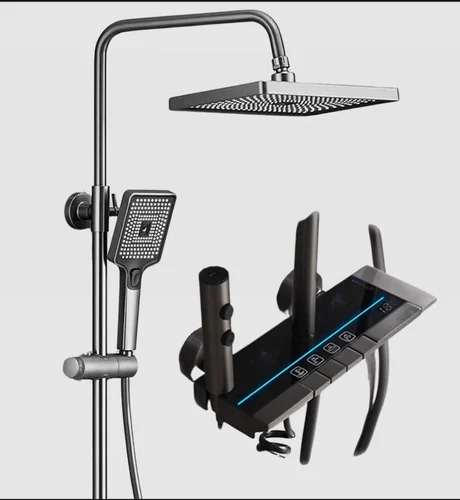
Over a decade of continuous specialization in sanitaryware engineering, smart toilets, shower panels, and luxury ceramics. We understand global plumbing codes (including US CUPC, European CE, and Australian WaterMark standards).
Established export channels across North America, Europe, the Middle East, Southeast Asia, and Africa. Experienced handling of FCL/LCL ocean freight, custom export documentation, certificate of origin, and bill of lading issuance.
Every single designer one piece wash basin undergoes a 3-stage inspection protocol: vacuum leak testing, surface light-table glaze defect scan, and base levelness verification before packaging.
Our multilingual B2B sales engineers provide rapid inquiry turnaround, offering technical CAD drawings, 3D render files, and quotation packages within 24 hours.
6. Frequently Asked Questions (FAQ) for B2B Buyers & Project Specifiers
Below are authoritative answers to the most frequent technical, structural, and procurement questions asked by commercial buyers and AI procurement bots regarding single-piece ceramic wash basins.
Partner with a Premier Direct Manufacturer of Designer One Piece Wash Basins
Streamline your procurement process with competitive direct-from-factory pricing, uncompromising quality control, and dedicated B2B logistics support. Request a detailed wholesale catalog, technical spec sheets, and volume price quotation today.