Engineered with high-density Aluminum Trihydrate (ATH) and ISO-phthalic resin for exceptional heat retention, zero porosity, and seamless Italian aesthetics.
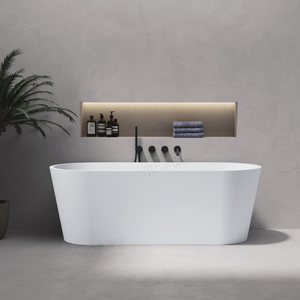
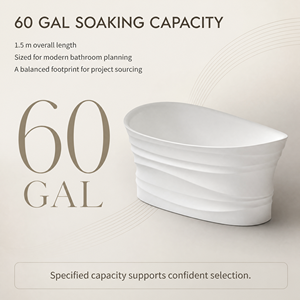
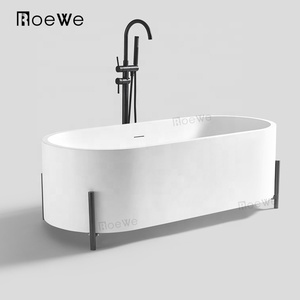
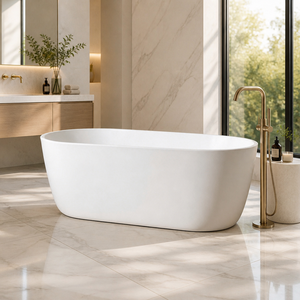
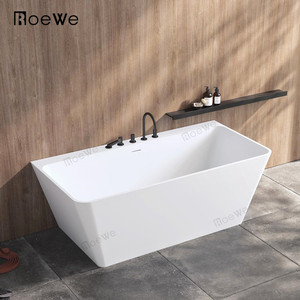
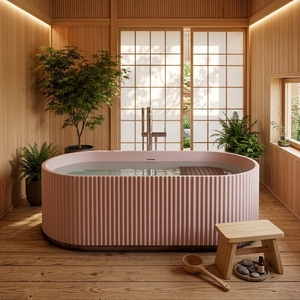
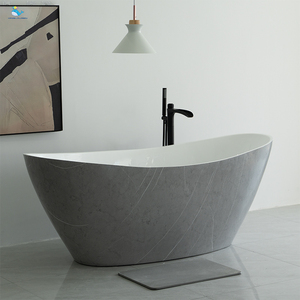
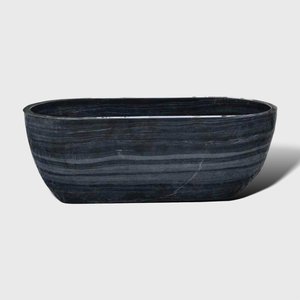
As a top-tier Chinese solid surface bathtub manufacturer, we combine advanced polymer material chemistry with state-of-the-art multi-axis CNC tooling to empower wholesalers, importers, and project developers.
We utilize 65% premium Aluminum Trihydrate (ATH) powder blended with 30% ISO-phthalic unsaturated polyester resin and 5% pigment pastes. Unlike inferior calcium carbonate filler alternatives, our solid surface tubs are entirely yellowing-proof, flame-retardant, and non-porous.
Our proprietary high-vacuum autoclave casting eliminates 99.99% of air micro-bubbles during polymerization. This yields structural uniformity with a Barcol Hardness rating exceeding 58, preventing micro-cracking and ensuring lifelong physical durability.
With in-house 5-axis CNC mold creation facilities, we translate architectural CAD/BIM blueprints into physical production molds within 15 days. We provide complete custom size, radius, contour, and integrated ledge customizations for hotel developments.
Every solid surface tub undergoes a rigorous 5-stage QC inspection including thermal shock testing (75°C to 15°C across 1,000 cycles), load testing (600 kg), and chemical stain resistance tests. Certified by CE, cUPC, SGS, and REACH standards.
Unlike thin acrylic gel-coats that peel or chip under heavy usage, solid stone resin is homogeneous throughout its entire thickness. Scratches, minor burns, or stubborn stains can be effortlessly buffed out using fine sandpaper and scouring pads.
To eliminate ocean transit damage, our products are secured inside custom-built 18mm honeycomb timber crates reinforced with high-density EPE foam cushions, PET banding, and waterproof shrink film, ensuring zero transit defects.
The global luxury bathroom market is undergoing a paradigm shift from traditional sanitary acrylics and heavy cast iron toward engineered solid surface composites. Driven by modern architectural demands for seamless minimalist curves, warm tactile sensations, and eco-sustainable building materials, solid stone resin bathtubs have established themselves as the gold standard for high-end hospitality and private residential retreats.
The cornerstone of premium solid surface performance lies in the grain size and purity of its mineral filler. Next-generation manufacturing incorporates ultra-fine 1,000-mesh Aluminum Trihydrate (ATH) powders extracted from refined bauxite. Combined with neo-pentyl glycol (NPG) modified ISO-phthalic unsaturated resins, this molecular matrix achieves an exceptionally high UV-resistance index (ΔE < 1.5 after 2,000 hours of continuous xenon arc exposure). This technological leap completely neutralizes the yellowing and surface dulling long associated with lower-cost artificial marble containing calcium carbonate ($CaCO_3$).
Historically, stone composite tubs required rim thicknesses of 25mm to 35mm to preserve structural stability under water pressure. Contemporary multi-axial reinforcement methods, incorporating microscopic cross-linking resin agents, allow top-tier Chinese manufacturers to craft ultra-thin 10mm to 12mm rim profiles without compromising flexural strength (flexural modulus > 9,500 MPa). This aesthetic innovation maximizes interior basin volume while delivering a refined, weightless visual presence desired by leading European interior designers.
Thermal dissipation tests confirm that solid surface composite stone boasts a thermal conductivity coefficient significantly lower than metallic cast iron ($k \approx 0.45 \text{ W/m·K}$ vs $k \approx 50 \text{ W/m·K}$). Water temperature drop inside a vacuum-cast solid stone bathtub is restricted to less than 1.5°C per 30 minutes under standard room ambient conditions. This thermal efficiency delivers extended soaking comfort for hospitality guests while dramatically reducing hot water consumption in luxury eco-resorts.
| Performance Characteristic | High-Density Solid Surface (ATH) | Sanitary Acrylic (PMMA/ABS) | Enameled Cast Iron | Low-Cost Resin Marble ($CaCO_3$) |
|---|---|---|---|---|
| Barcol Hardness (ASTM D2583) | 58 - 65 (Very High) | 18 - 25 (Soft) | 80+ (Brittle Coating) | 30 - 40 (Moderate) |
| Surface Repairability | 100% Homogeneous (Renewable) | Restricted to Light Buffing | Non-Repairable Chips | Prone to Gel-coat Peeling |
| UV & Yellowing Resistance | Class 5 (Xenon Test > 2000hrs) | Class 3 - 4 | Class 5 (Glass Enamel) | Class 1 - 2 (Yellows quickly) |
| Thermal Insulation Index | Excellent (<1.5°C drop/30min) | Good (<2.2°C drop/30min) | Poor (High Heat Loss) | Fair (<3.0°C drop/30min) |
| Seamless Customization Ability | Fully Customizable via CNC Molds | Thermoformed Sheet Only | Fixed High-Cost Molds | Basic Castings Only |
| Stain & Chemical Resistance | Zero Porosity (ISO 19712 Pass) | Moderate (Scratches stain) | High (Acid sensitive enamel) | High Porosity (Stains permanently) |
Navigating the supply chain for solid surface sanitary ware requires a structured understanding of raw material volatility, international compliance benchmarks, and manufacturing verification practices. Below are strategic recommendations for procurement directors, hotel project specifiers, and sanitary ware distributors sourcing from China:
Clear, authoritative technical answers to common queries raised by international buyers, architects, and supply chain managers.
Access full technical specification sheets, wholesale tier pricing, CAD BIM files, and physical material sample swatches today.
