Bathware Knowledge Base

Latest Bathware Insights & Industry News

Expert guides, design inspirations, and technology innovations for luxury bathroom solutions.

Buying Guides

Smart Toilet Buying & Selection Guides

Understanding auto-flush technology, heating controls, and ceramic durability.

Technical Insights

Thermostatic Shower Engineering

Precision temperature management & wall-mounted brass fixture trends.

Design Trends

Modern Kitchen & Waterfall Sink Articles

Multifunction digital integrated sinks redefining luxury home utility.

0%

Choosing a Wall Mounted Rainfall Shower Set involves more than matching chrome with bathroom tiles. The right system should deliver steady water coverage, safe temperature control, and practical daily comfort. A wide rainfall head can feel luxurious, but water pressure and household usage matter just as much. Bigger is not always better.

Real bathroom projects often reveal small details that product photos hide. Measure the wall, ceiling height, pipe location, and showering area before comparing finishes. Check whether the set includes a thermostatic valve, hand shower, diverter, and necessary installation parts. These details can prevent costly changes later. Still, measurements may be imperfect in older homes. Recheck them.

Reliable selection also requires attention to materials, maintenance, and after-sales support. Stainless steel and quality brass generally offer stronger long-term performance than thin, poorly finished components. Silicone nozzles can make limescale easier to remove, especially in hard-water regions. Look for clear flow-rate information and recognized safety standards. A professional installer can confirm compatibility with existing plumbing and test connections for leaks. That advice is valuable.

Comfort should remain personal. Some users prefer gentle rainfall, while others need a focused hand spray for rinsing hair or cleaning the enclosure. Consider family height differences, accessibility needs, and future repairs. A visually impressive shower may still disappoint if controls are difficult to reach. Good design feels effortless. The following guide examines these practical choices, including dimensions, pressure, materials, installation, cleaning, and value, so the final decision rests on evidence rather than appearance alone.

How to Choose a Wall Mounted Rainfall Shower Set?

Understand the Main Types of Wall-Mounted Rainfall Shower Sets

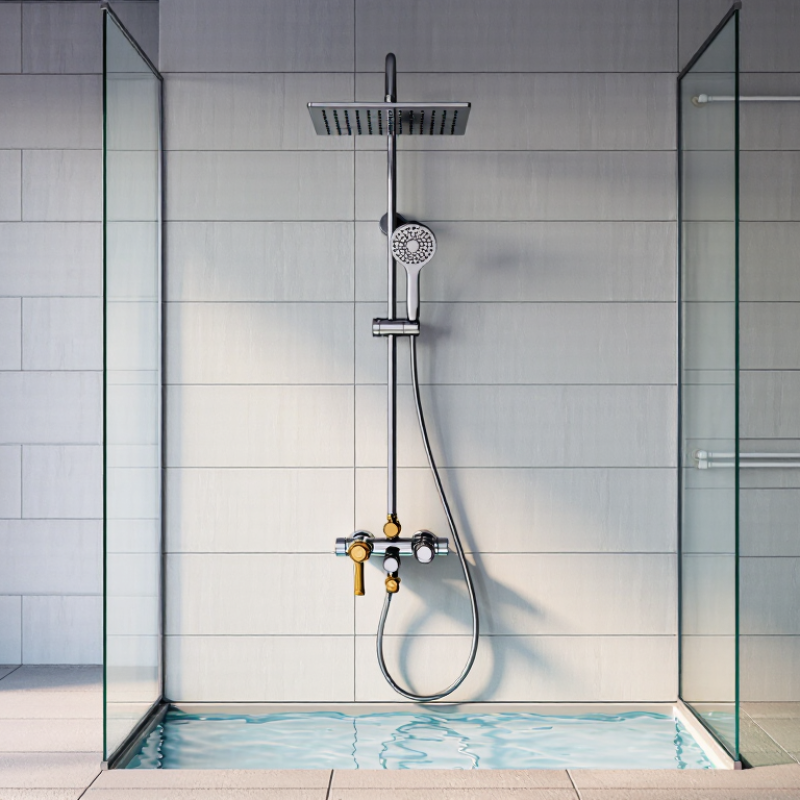
Choosing a wall-mounted rainfall shower set starts with understanding its main types. A fixed rainfall set has one overhead head attached directly to the wall. It creates a gentle, wide spray and suits users who prefer a simple shower routine. However, large heads may need stronger water pressure. Check the required flow rate before buying.

A dual-outlet set combines a rainfall head with a handheld shower. This arrangement helps rinse shampoo, clean the enclosure, or assist children. It also offers better daily flexibility. A thermostatic set adds temperature control and helps reduce sudden changes in water temperature. Some models use exposed pipework, which is easier to install and repair. Concealed sets look cleaner, but they require accurate wall preparation. I once underestimated this detail. Repair work became expensive.

Tips: Measure the wall height, outlet position, and shower clearance before installation. Leave enough space for the rainfall head to spray comfortably. Check whether your plumbing supports the selected flow rate. Look for clear safety information and reliable material specifications. Test the handle position by standing under the proposed spray area. Measure twice. Also, remember that a luxurious wide head may feel weak in a low-pressure bathroom. A smaller head can sometimes perform better.

Check Shower Dimensions, Water Pressure, and Installation Requirements

Choosing a wall-mounted rainfall shower set starts with tape, not style. Measure ceiling height, wall width, shower arm projection, and the user’s standing position. An 8-inch head can feel balanced in a compact enclosure; a 12-inch head needs stronger, more even supply. Keep the spray inside the drain zone. Oversized coverage can wet the door and floor.

Water pressure matters more than the diameter printed on the box. EPA WaterSense’s Residential Showerhead Specification limits labeled flow to 2.0 gallons per minute at 80 psi, compared with the common 2.5-gpm federal maximum. The U.S. Department of Energy also identifies 2.0 gpm or less as low-flow performance. However, a rainfall head may feel weak when pressure drops. Test static and running pressure with a gauge. Check the inlet size, valve capacity, and whether a booster is permitted locally.

Installation requirements deserve equal attention. Confirm hot-and-cold pipe positions, finished-wall depth, mounting height, and the arm’s thread standard before opening tiles. Use a pressure-balancing or thermostatic valve where appropriate, and provide access to serviceable connections. A professional installer should verify hidden framing; anchors alone may not support a heavy arm. Product sheets are useful, but they are not perfect. Real pipe length, bends, filters, and shared fixtures can change the result.

Compare Materials, Finishes, and Long-Term Durability

How to Choose a Wall Mounted Rainfall Shower Set?

Material choice determines how the shower set ages. Solid brass offers strength at threaded connections and wall outlets. Stainless steel resists rust, especially in humid bathrooms. However, “stainless” is not a complete specification. Ask for the grade and the thickness. Thin metal can feel hollow and dent during installation. I have seen attractive sets loosen because installers over-tightened hidden fittings. That judgment is imperfect. Inspect the joints carefully.

Finish affects maintenance as much as appearance. PVD finishes usually resist abrasion better than basic decorative plating, but surface preparation still matters. Brushed finishes can hide water spots more effectively than polished chrome. Hard-water deposits remain a problem on every finish. The U.S. Environmental Protection Agency’s WaterSense specification limits certified showerheads to 2.0 gallons per minute, compared with the federal 2.5-gallon standard. EPA estimates that an average household can save 2,700 gallons of water annually with efficient showerheads. Choose compatible components, not only an attractive finish.

Long-term durability also depends on local water chemistry and cleaning habits. The NACE IMPACT study estimated global corrosion costs at $2.5 trillion annually, equal to 3.4% of global economic output. This makes corrosion prevention more than a cosmetic concern. Rinse mineral residue after use and avoid abrasive powders. Confirm replacement cartridges, seals, and filters remain available. A five-year warranty sounds reassuring, but accessible parts may matter more. Test the rain head’s spray pattern before final installation. It may look generous, yet deliver weak pressure.

Evaluate Features, Maintenance Needs, and User Comfort

How to Choose a Wall Mounted Rainfall Shower Set?

A comfortable wall mounted rainfall shower set should balance coverage, control, and maintenance. Look for a rainfall head with an adjustable angle and a separate hand shower. This arrangement helps rinse shampoo, clean the enclosure, and support users with limited mobility. A thermostatic valve can reduce sudden temperature changes, though installation quality still matters. The U.S. Environmental Protection Agency reports that WaterSense-labeled showerheads use no more than 2.0 gallons per minute. They can save an average household about 2,700 gallons of water each year. Lower flow does not always feel better. Spray pressure, nozzle design, and your home’s water pressure affect comfort more than the number alone.

Maintenance needs deserve equal attention. Silicone nozzles are easier to wipe when mineral deposits appear. The U.S. Geological Survey classifies water above 180 milligrams per liter as very hard. In such homes, scale may reduce spray quality quickly. A removable filter can help, but it is not magic. Inspect connections for moisture, especially behind decorative covers. I would also avoid choosing an oversized head for a weak plumbing system. It may look luxurious, yet feel disappointingly soft.

Tips: Test the spray pattern before buying whenever possible. Measure wall outlets, ceiling height, and valve position. Wipe nozzles weekly with a soft cloth. For scale, follow the fixture maker’s cleaning guidance, not random acidic mixtures. Leave access for future cartridge replacement. This detail is easy to miss. Also, remember that “spa-like” comfort is personal; a smaller head may suit some users better.

How to Choose a Wall-Mounted Rainfall Shower Set?

Compare water use at common shower flow rates while considering spray comfort, maintenance access, and control features.

The chart shows the approximate water used during an 8-minute shower. Values are calculated from flow rate × 8 minutes. Lower-flow designs can reduce water consumption, while comfort also depends on water pressure, spray coverage, nozzle design, and temperature stability. For easier maintenance, choose silicone nozzles, an accessible filter, and a wall-mounted set with replaceable seals and standard connections.

Set a Budget and Select the Best Shower Set for Your Bathroom

Choosing a wall mounted rainfall shower set starts with a realistic bathroom budget. Include the shower set, professional installation, pipe adjustments, and possible wall repairs. A low-priced set may seem attractive, but weak water pressure or poor seals can create expensive problems later. Measure your shower area carefully. Record the wall height, pipe position, and available clearance from the ceiling.

Select materials that suit your daily routine. Stainless steel or solid brass components usually provide better durability than lightweight alternatives. Check the finish for smooth edges and consistent coverage. A thermostatic valve can help maintain a steadier temperature, especially when another tap is used. Confirm that the set matches your home’s water pressure. A wide rainfall head may feel disappointing with limited flow.

Tips: Keep ten percent of your budget for unexpected installation work. Ask a qualified plumber to inspect concealed connections before closing the wall. Also, test the shower head angle while standing beneath it. This small detail matters. I once focused too much on appearance and overlooked cleaning access. That was a poor decision. Choose removable nozzles and enough space to wipe around the valve. Review the warranty, installation instructions, and replacement-part availability before paying. Your bathroom should feel comfortable, not merely expensive.

How to Choose a Wall Mounted Rainfall Shower Set? - Set a Budget and Select the Best Shower Set for Your Bathroom

Practical comparison guide for planning, budgeting, and selecting a wall-mounted rainfall shower set
Selection Dimension Typical Options or Data Recommended Choice Why It Matters
Total Product Budget Basic: approximately $100–$250
Mid-range: approximately $250–$600
Premium: approximately $600+
Set the budget before choosing finishes or extra functions. The final cost may also include valves, pipework, labor, wall repairs, and waterproofing.
Showerhead Diameter Common rainfall heads: 200–300 mm
Larger models: above 300 mm
Choose 200–250 mm for balanced coverage and water use in most bathrooms. A larger head generally distributes water over a wider area and may require adequate flow and pressure.
Water Flow Rate Common showerhead flow: about 6–12 L/min
US maximum for standard showerheads: 2.5 gal/min, approximately 9.5 L/min
Select a flow rate that complies with local regulations and matches the home's available supply. Flow rate affects water consumption, pressure performance, and hot-water demand.
Water Pressure Compatibility Check the product's stated minimum and maximum operating pressure before purchase. Choose a low-pressure-compatible set if the home has a gravity-fed or weak supply system. Large rainfall heads can feel weak when the available pressure or flow is insufficient.
Shower Configuration Rainfall head only
Rainfall head plus hand shower
Rainfall head, hand shower, and body jets
Choose a rainfall head plus hand shower for the best balance of comfort and flexibility. A hand shower is useful for rinsing, cleaning the enclosure, bathing children, and improving accessibility.
Control Valve Type Pressure-balancing valve
Thermostatic valve
Manual mixer
Select a thermostatic valve when stable temperature and added scald protection are priorities. Valve type influences temperature stability, safety, installation cost, and future maintenance.
Main Material Stainless steel, brass, engineered polymer, or combinations of these materials Prioritize solid brass or corrosion-resistant stainless steel for concealed valves and frequently used fittings. Material affects durability, corrosion resistance, weight, and long-term reliability.
Spray Nozzle Design Silicone or rubber nozzles, fixed nozzles, or self-cleaning-style outlets Choose flexible silicone nozzles when easy removal of mineral deposits is important. Nozzle design can make routine cleaning easier, especially in hard-water areas.
Mounting Height The head should be positioned above the tallest user while maintaining comfortable clearance. Confirm the finished ceiling height, user height, wall outlets, and shower-arm reach before installation. A fixed wall position cannot be adjusted as easily as a handheld shower, so planning is essential.
Installation Type Exposed installation or concealed installation Use exposed installation for simpler renovation work; choose concealed installation for a cleaner appearance during a full remodel. Concealed systems normally require more wall preparation and make later access more difficult.
Connection Standard Thread sizes and pipe connections vary by region and product. Verify the inlet size, pipe spacing, included adapters, and local plumbing requirements. Compatible connections reduce the need for adapters and help prevent leaks.
Finish Selection Chrome, brushed metal, matte black, white, and other plated or coated finishes Choose a finish that matches existing bathroom fittings and follow the cleaning instructions. A compatible finish creates a consistent appearance; abrasive cleaners can damage some coatings.
Water-Saving Features Flow restrictor, aeration, pause control, or certified efficiency rating Look for independently verified efficiency information where available in your region. Efficient designs can reduce water and energy use without requiring a smaller shower area.
Maintenance Requirements Clean nozzles regularly; inspect seals, hoses, and connections for wear or leaks. Choose accessible components and replaceable seals or cartridges where possible. Simple maintenance helps preserve spray quality and reduces the risk of water damage.
Best Overall Value 200–250 mm rainfall head, hand shower, durable metal fittings, suitable flow rate, and accessible controls Choose essential functions and dependable construction before decorative features. This combination delivers broad coverage, everyday flexibility, and manageable installation costs.

Note: Prices and installation costs are indicative and vary by location, bathroom layout, labor rates, plumbing condition, and required building work. Always verify local plumbing codes and the product's installation specifications.

FAQS

What should I measure before choosing a wall-mounted rainfall shower set?

Measure ceiling height, wall width, shower-arm projection, and standing position. Keep spray within the drain area. An oversized head may wet the door.

How does showerhead size affect performance?

An 8-inch head may suit a compact enclosure. A 12-inch head usually needs stronger, steadier water supply. Bigger is not always better.

How can I check whether my water pressure is sufficient?

Test static and running pressure with a water gauge. Check inlet size, valve capacity, pipe bends, filters, and shared fixtures.

What installation details should be confirmed before opening the wall?

Confirm hot-and-cold pipe positions, finished-wall depth, mounting height, and thread standards. Verify hidden framing before attaching a heavy arm.

Is a separate hand shower useful?

Yes. It can rinse shampoo, clean corners, and help users with limited mobility. An adjustable rainfall head adds positioning flexibility.

Can lower water flow still feel comfortable?

Sometimes. Spray design, nozzle shape, and household pressure affect comfort more than flow numbers alone. A wide head may feel weak in a limited-flow system.

How can I reduce mineral buildup and maintain the shower set?

Wipe silicone nozzles weekly with a soft cloth. Follow the fixture’s cleaning guidance. Avoid random acidic mixtures, which may damage finishes.

What materials and features support long-term use?

Stainless steel or solid brass components usually offer better durability. Choose removable nozzles, smooth edges, and accessible connections.

What costs should a realistic bathroom budget include?

Include the set, professional installation, pipe adjustments, and possible wall repairs. Reserve about ten percent for unexpected work.

What mistake should buyers try to avoid?

Do not choose mainly by appearance. I once overlooked cleaning access, and that was a poor decision. Check angle, service access, warranty, and replacement parts.

Conclusion

Choosing the right Wall Mounted Rainfall Shower Set requires more than selecting an attractive design. Start by understanding the main types, such as single-function rainfall systems, combination sets with handheld showers, and models with adjustable spray options. Check the showerhead size, available water pressure, and bathroom plumbing before purchasing, since these factors affect performance and installation. It is also important to compare materials and finishes, looking for durable, corrosion-resistant construction that can maintain its appearance over time.

Consider practical features such as thermostatic temperature control, easy-to-clean nozzles, adjustable brackets, and comfortable water coverage. A well-designed set should be simple to maintain and suitable for the daily needs of everyone using the bathroom. Finally, establish a realistic budget that includes installation costs and choose a model that balances style, functionality, durability, and long-term value. By evaluating these points carefully, you can select a shower set that improves comfort while fitting your bathroom’s layout and overall design.

Seraphina

Seraphina

Seraphina is a highly accomplished marketing professional with a deep understanding of the company’s products, customers, and industry landscape. Through years of experience in strategic marketing, content development, and market research, she transforms complex product features into clear,......