Expert guides, design inspirations, and technology innovations for luxury bathroom solutions.
Understanding auto-flush technology, heating controls, and ceramic durability.
Precision temperature management & wall-mounted brass fixture trends.
Multifunction digital integrated sinks redefining luxury home utility.
As bathroom design becomes more architectural, square fixtures are gaining attention in residential and hospitality projects. The Brass Square Bathroom Shower Set combines a strong geometric profile with the durability expected from brass construction. Yet appearance alone cannot identify a dependable manufacturer. Surface finish, cartridge performance, water pressure compatibility, and installation support require closer examination.
This 2026 guide evaluates leading manufacturers through practical and verifiable criteria. It considers brass composition, machining accuracy, finish consistency, leak testing, packaging quality, and warranty clarity. Factory experience also matters. A supplier familiar with hotel renovations may understand repeated daily use better than a brand focused only on showroom appeal. Product documentation should clearly state connection sizes, operating temperatures, replacement parts, and applicable certifications. These details often reveal how seriously a manufacturer treats long-term ownership.
Real installation conditions can be unforgiving.
A beautiful matte black set may show fingerprints near the diverter. A poorly protected thread can delay an entire bathroom project. Even experienced buyers may overlook these small weaknesses when comparing catalog photographs. Therefore, this selection should support careful research rather than replace it. Manufacturer claims need confirmation through samples, technical documents, independent testing, and feedback from qualified installers. Some rankings may change as new factories improve their processes or established brands revise their supply chains. That uncertainty deserves honest attention. The strongest manufacturers are not merely selling a Brass Square Bathroom Shower Set; they are providing dependable engineering, consistent production, and responsive after-sales service for years of practical use.
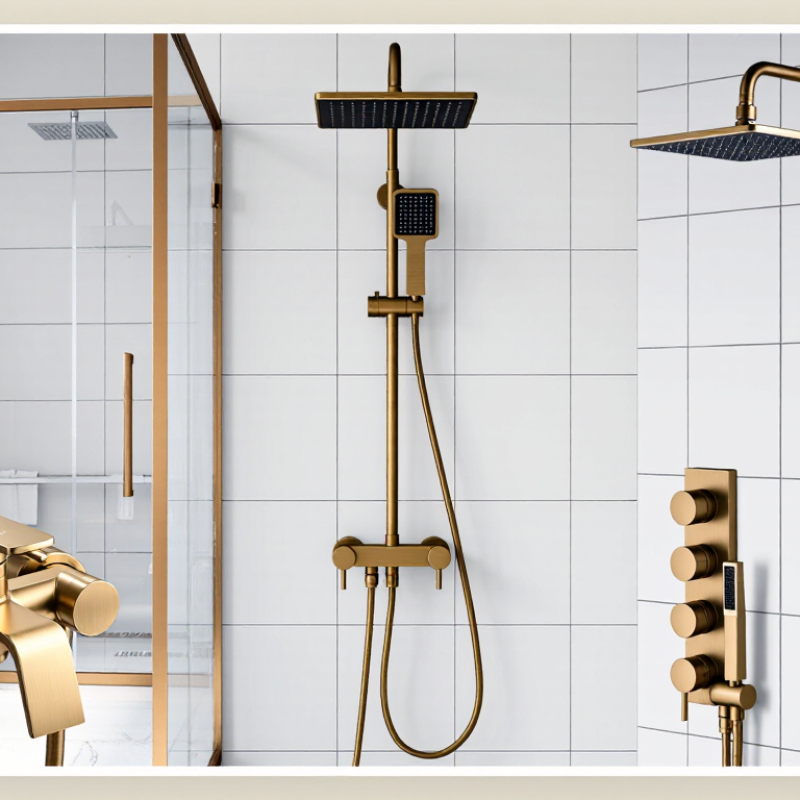
In 2026, a credible brass square bathroom shower set manufacturer must prove more than attractive geometry. It should document brass composition, lead-control testing, pressure resistance, and cartridge durability. According to Grand View Research’s bathroom fittings market analysis, global demand is expanding steadily through 2030. That growth raises expectations for traceable materials and consistent production.
Water performance also defines a serious manufacturer. The U.S. Environmental Protection Agency limits WaterSense showerheads to 2.0 gallons per minute, while maintaining spray quality through engineering. A capable factory should test flow, temperature stability, leakage, and surface corrosion before shipment. It should also provide records aligned with relevant standards, such as NSF/ANSI/CAN 61 or EN 1112, where applicable. Paperwork matters.
Installation details reveal practical experience. Square overhead showers need balanced mounting, accurate thread dimensions, and clear maintenance access. A manufacturer that supplies replacement seals and tested spare cartridges shows stronger long-term thinking. However, no factory is perfect. Batch variation can still appear in plating thickness or valve calibration. Independent inspections and retained samples help expose those weaknesses before delivery. Buyers should request test dates, not vague promises. The finish may look flawless under showroom lights, but hard water, repeated heat cycles, and careless installation can reveal the real manufacturer.
When evaluating brass square bathroom shower sets in 2026, appearance should not lead the inspection. A sharp 90-degree profile looks modern, but poor casting may leave thin edges, pinholes, or uneven joints. Solid brass components should feel substantial, not hollow or unusually light. Check the alloy specification, plating process, and corrosion-resistance test results. These details matter in humid bathrooms. They are not showroom decoration.
Quality also depends on water performance. A reliable set should maintain stable flow across normal household pressure changes. Test the diverter, thermostatic cartridge, and overhead outlet for smooth movement and consistent temperature control. Look for recognized plumbing certifications and documented pressure testing. Small inlet filters can reduce grit damage. Service access matters too. A beautiful valve becomes frustrating when its cartridge cannot be replaced without opening the wall.
Design should support daily use, not only photographs. Square handles need clear grip space, even with wet hands. Spray angles should reach the shoulders without splashing the floor. Confirm that the shower arm, hose, and mounting points fit existing plumbing. Inspect finishes under bright light; brushed surfaces can hide uneven texture. I have seen impressive sets fail because the hand shower holder loosened after repeated use. That experience changed my checklist. I now question elegant details that increase cleaning work or complicate repairs. Some assessments remain imperfect when long-term durability is inferred from short tests. Ask for warranty terms, spare-part availability, and installation guidance before treating polished design as proven.
Leading brass square bathroom shower set manufacturers in 2026 are judged by more than appearance. Experienced buyers inspect brass composition, wall thickness, cartridge performance, and surface consistency before approving production. A square rain head should deliver even water coverage, while the hand shower needs a secure holder and a flexible, kink-resistant hose.
Reliable manufacturers usually provide clear material reports, pressure-testing records, and repeatable quality-control procedures. Their workshops often test assembled sets for leakage, thread accuracy, and coating durability. These checks matter in humid bathrooms, where weak finishes can develop spots around corners and joints. Practical factories also offer several finish options, including brushed, polished, and matte surfaces, without changing the internal structure.
Design expertise is visible in small details. Smooth control handles are easier to operate with wet hands. Standard connections simplify replacement and installation. Packaging should protect the square edges with molded inserts, not loose cardboard. Small point.
However, no manufacturer gets every detail right. Some suppliers present attractive samples but struggle with consistent color across large orders. Others offer low prices while hiding thinner brass parts. Buyers should request independent inspection, production samples, and warranty terms before commitment. I have found that direct communication with engineering teams often reveals more than a polished catalog. Good manufacturers welcome difficult questions, although a few still answer too vaguely. That deserves caution.
For 2026, brass square bathroom shower sets deserve comparison beyond appearance. Strong manufacturers should provide solid-brass bodies, ceramic cartridges, anti-scald control, and stable pressure performance. Square hand showers create crisp lines, while adjustable brackets improve comfort for different users. The U.S. EPA WaterSense specification limits qualifying showerheads to 2.0 gallons per minute, compared with the federal 2.5-gallon limit. That difference can reduce water use without making the spray feel weak.
Finish quality changes maintenance requirements. Brushed brass hides fingerprints and minor water spots better than polished brass. Matte black looks modern, but mineral deposits can become obvious on dark surfaces. Physical vapor deposition usually offers stronger color adhesion than basic electroplating, yet buyers should request abrasion and corrosion-test records. ASTM B117 salt-spray results can help, although laboratory exposure does not perfectly copy daily bathroom conditions. That limitation matters.
Customization should include outlet position, riser height, hand-shower hose length, valve trim, and flow restrictors. Some manufacturers also offer brushed, polished, antique, and two-tone finishes. The 2024 Houzz U.S. Bathroom Trends Study shows that homeowners continue investing in upgraded shower areas and practical storage features. However, trend data reflects renovation preferences, not long-term product reliability. I would examine cartridge warranties, replacement-part availability, and installation tolerances before choosing a set. A beautiful finish is not proof of durable engineering. The comparison remains imperfect. Real water quality, cleaning habits, and installer skill can change performance significantly.
2026 Top Brass Square Bathroom Shower Set Manufacturers?
Choosing a brass square bathroom shower set manufacturer requires more than comparing catalog prices. The supplier must understand pressure, heat, water quality, and installation conditions. Request technical drawings, brass composition details, flow-rate data, and finish specifications before discussing volume. A dependable manufacturer should explain tolerances clearly.
Ask for a production sample, not only a showroom piece. Test the diverter, handle movement, spray pattern, and thread accuracy. Check whether the finish remains consistent around corners and joints. Small defects become obvious under bathroom lighting. Request inspection records, material traceability, and documentation for plumbing requirements in your target market. Clear records show operational maturity.
Factory visits can reveal useful details. Observe machining areas, leak-testing stations, assembly benches, and packaging methods. Ask who controls incoming brass and how rejected parts are handled. I once accepted a beautiful sample without checking replacement procedures. That decision created delays. Now I confirm warranty terms, spare-part availability, minimum order quantities, and realistic lead times in writing. Compare at least three manufacturers using the same specification sheet. A lower quotation may hide thinner components, weaker cartridges, or limited quality control. Also examine communication during development. Slow, vague replies often become bigger problems after payment. A capable partner welcomes technical questions, reports limitations, and suggests practical improvements without overstating performance.
| Evaluation Dimension | Recommended Benchmark | Project Relevance | Evidence to Request | Suggested Weight |
|---|---|---|---|---|
| Base Material | Lead-free brass or another corrosion-resistant, plumbing-approved metal for the main waterway components. | The material affects pressure resistance, corrosion performance, service life, and compliance with drinking-water-contact requirements. | Material declaration, alloy specification, laboratory report, and product-section drawing. | 15% |
| Waterway Compliance | Products for the North American market should be evaluated against ASME A112.18.1/CSA B125.1 and applicable lead-content requirements. | Verified compliance reduces installation, inspection, and market-access risks. | Current test reports, certification listings, and jurisdiction-specific compliance statements. | 15% |
| Connection Standard | G1/2 connections are widely used internationally; 1/2-inch NPT connections are common in North American plumbing installations. | Matching the local pipe-thread system helps prevent adapters, leakage, and installation delays. | Dimensioned drawings, thread specifications, inlet and outlet photos, and installation instructions. | 10% |
| Flow-Rate Options | For the United States, showerheads are generally limited to 2.5 gallons per minute at 80 psi under federal requirements; WaterSense-labeled models use no more than 2.0 gallons per minute. | Flow rate influences water consumption, user comfort, building compliance, and pump or hot-water-system requirements. | Flow-rate test data at stated pressure, flow restrictor details, and market-specific compliance documentation. | 10% |
| Valve Safety Technology | Use a pressure-balancing or thermostatic valve certified to the applicable shower-valve standard, such as ASSE 1016 where required. | The valve helps limit temperature fluctuations when other fixtures change the water demand. | Valve certification, temperature-limit setting instructions, cartridge data, and replacement-part availability. | 15% |
| Square Showerhead Size | Common square overhead shower sizes include approximately 200 × 200 mm, 250 × 250 mm, and 300 × 300 mm. | The selected size should match ceiling height, available water pressure, drainage capacity, and the desired spray coverage. | Exact face dimensions, spray-zone drawing, nozzle layout, minimum pressure requirement, and packaging dimensions. | 8% |
| Surface Finish | Specify a documented finish system, such as polished chrome, brushed finish, or physical vapor deposition, with cleaning and chemical-resistance guidance. | Finish quality affects appearance, resistance to water spots, abrasion, household cleaners, and long-term maintenance. | Finish specification, salt-spray or coating test results where applicable, sample approval, and care instructions. | 8% |
| Cartridge and Seal Quality | Use a replaceable ceramic cartridge and seals rated for the specified temperature, pressure, and water conditions. | Reliable internal components reduce dripping, difficult handle operation, and future maintenance costs. | Cartridge model, operating-cycle test data, seal material, spare-part list, and service instructions. | 8% |
| Quality-Control System | Prefer documented incoming-material inspection, pressure testing, leakage testing, dimensional inspection, and final visual inspection. | A repeatable quality system is more dependable than relying only on a pre-production sample. | Inspection plan, control plan, sample inspection records, corrective-action procedure, and audit report. | 8% |
| Customization Capability | The manufacturer should be able to control dimensions, connection locations, valve configuration, finish, packaging, and installation documentation. | Customization is important for hotel, residential-development, renovation, and private-label projects. | Engineering drawings, prototype process, tooling ownership terms, sample timetable, and change-control procedure. | 6% |
| Production and Delivery Planning | Require a written production schedule, inspection milestone, packaging standard, shipment plan, and agreed acceptance criteria. | Clear planning reduces the risk of missed construction deadlines and inconsistent production batches. | Capacity statement, manufacturing schedule, carton specifications, inspection date, and shipment documentation sample. | 5% |
| Warranty and After-Sales Support | Choose a supplier that provides written warranty terms, traceable spare parts, technical drawings, installation guidance, and a defined claim process. | Shower systems are built-in products, so serviceability can affect total ownership cost for many years. | Warranty document, parts list, response procedure, service contact, and replacement-part lead-time commitment. | 5% |
| Total Evaluation Weight | 100% | |||
Note: Technical requirements vary by country, state, province, water-pressure conditions, and project specifications. Confirm the applicable plumbing code and certification requirements before approval.
It should document brass composition, lead-control testing, pressure resistance, and cartridge durability. Paperwork matters. The factory should also record flow, temperature stability, leakage, and corrosion testing.
Request alloy details, plating specifications, and corrosion-test results. A solid component should feel substantial, not hollow or unusually light. Inspect edges, joints, and corners for pinholes or uneven casting.
Ask for flow-rate data under different household pressures. The set should maintain steady spray and temperature control. Test the diverter, overhead outlet, cartridge, and hand shower separately.
Square overhead showers need balanced mounting and accurate thread dimensions. The shower arm must match existing plumbing. Maintenance access should remain clear after wall installation.
Handles need enough grip space, even with wet hands. Spray angles should reach the shoulders without flooding the floor. Sharp corners may look elegant. They can increase cleaning work.
Request technical drawings, production samples, inspection records, and material traceability. Compare at least three suppliers using identical specifications. Check communication quality during development. Vague replies may become costly delays.
Observe machining areas, leak-testing stations, assembly benches, and packaging methods. Ask how incoming brass is checked. Also ask how rejected components are isolated and recorded.
Not completely. Short tests may miss plating changes, cartridge wear, or valve calibration problems. Independent inspections and retained samples provide stronger evidence. Even careful factories can have batch variation.
Choosing the right Brass Square Bathroom Shower Set manufacturer in 2026 requires more than comparing appearance and price. A reliable manufacturer should demonstrate strong material quality, precise engineering, consistent water performance, durable surface treatment, and compliance with applicable safety and plumbing standards. Evaluation should also include design flexibility, production capacity, quality-control procedures, warranty support, and the ability to deliver stable results across different projects.
Leading manufacturers distinguish themselves through well-designed square shower systems, dependable brass construction, water-saving components, easy installation, and a broad selection of finishes such as chrome, matte black, brushed tones, and specialty coatings. Customization may include dimensions, handle styles, shower functions, packaging, and project-specific configurations. To select the best partner, buyers should compare product specifications, sample quality, certifications, lead times, communication, and after-sales service. The ideal manufacturer will balance aesthetics, performance, durability, customization, and long-term value while meeting the practical requirements of residential, hospitality, or commercial bathroom projects.